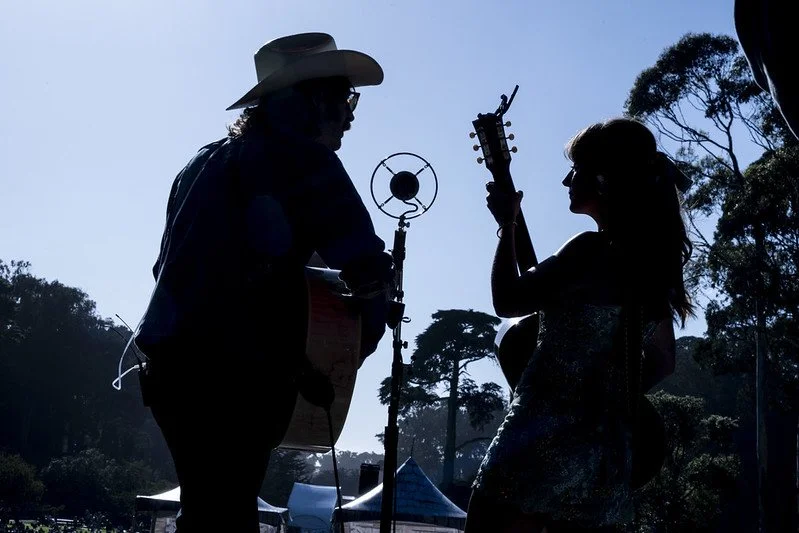
Interview: Sawyer Hill Talks New Album, Johnny Cash, and Being Vulnerable
Many songs that have fallen under the guise of writing about America over these last few years tend to reminisce on the same subjects: tractors, beer, insert any stereotypical country singer premise here. Then you have artists like Sawyer Hill, who breathe fresh air into the subject matter. Hill isn’t a country singer, but he has a blues and Americana feel to his music that is deeply reflective of both himself and the stories of others that are happening around this modern version of America. Stories about struggle, debt, hardship, addiction, real issues that are plaguing citizens today. He relays these tales in a husky baritone reminiscent of the great Johnny Cash (he’s even covered the iconic songwriter’s “Folsom Prison Blues”, to critical acclaim).
Sawyer Hill is an artist of today’s generation that has a lot to say about his past and what he sees happening in the world. His debut album, Everybody’s Home, Nobody’s Happy, is set to be released this Friday, August 21st via AWAL. Ahead of the release, and just after his performance at this year’s Outside Lands Music Festival in San Francisco, we sat down with Hill to discuss vulnerability in music, stepping outside of his comfort zone, and how exactly he came about doing that “Folsom Prison Blues” cover all those years ago.
Main Photo: Jared Stossel
I want to talk about your song “Jimmy’s Gone Numb”. It’s an Americana-style song, yet it seems to speak to a lot of issues that are actually going on in America versus some of the subject you might hear in a lot of pro-America songs today. Where does that story come from?
You know, I feel like a lot of these issues that are talked about in “Jimmy’s” are an amalgamation of me talking to my friends, to my family, people on the road, and similar stories keeping coming up like “I went to the hospital, I have insane debt now”. People talking about the war that’s going on, all these different things. How things have changed so drastically since we were grown, and the promises that were made by our parents. I really just wanted to wrap all of those emotions up - the feelings that I felt, the feelings that I’ve been getting from everybody. I want to capture all of those and put them in a song, bottle it up.
In my opinion, when you talk about political things and art, you want to do it in a way that’s going to age well, that’s going to speak to a lot of different people, and is a good song that you can just listen to with the windows down. My way of doing that in a tasteful way, and threading that needle, was doing a story.
You covered “Folsom Prison Blues” by Johnny Cash last year. There are a lot of Cash songs you can choose from. Why that one?
That’s a really good question, and I don’t really know. I’ve been doing that cover ever since I was a kid.
It’s a great cover.
Thank you. I’ve been playing it ever since I was 15 at all these bars in Oklahoma, Arkansas, and Texas. With the cover, new parts get added over the years. It’s something that I’ve always done. Over on the Yungblud tour, people were just freaking out about it. I was like, I might as well record it.
You have a brand new album, ‘Everybody’s Home, Nobody’s Happy’, set to be released this month. How long in the making has this album been, when did you start putting together the album, and how did it eventually come together?
You know, the first song that I wrote for it was a song called “Going To Hell”. I wrote that two or so years ago. At the time, it was such a vulnerable song that it really scared me. Maybe I wasn’t ready to go that deep with my audience about me, my life, my personal experiences, and trauma, for lack of a better word. I just kinda shelved. I felt like when I was coming back to make another record, I felt like I had to dig deeper. If I didn’t dig deeper with myself and the subject matter, I would have really regretted it. I didn’t want to do something that felt surface level. I wanted to keep going deeper and challenge my audience. If I just belittled my audience, it would be like “well, you know, it’s heartbreak songs, and that’s what we do here”. And that’s not what I wanted to do here, and that’s not who I want to be. I love those songs, but there are so many more things to talk about.
When I came to this record, I wanted to do something deeper. I started going through my files, and I came back to [“Going to Hell”]. That song is about growing up in a Pentecostal church, which, if you’re familiar, is super strict. My Mom had a dress down to her ankles and never cut her hair, couldn’t wear makeup. It was such an interesting way to grow up and I felt like, “how could I share this perspective with everyone?” It’s not even just the religious thing; you zoom out from the religious thing and go into the political thing. There’s a bigger question with religion that’s like, what do you worship? What do we worship as a culture? Where are our priorities? It plays on themes of religiousness, worship, the culture of celebrity, all these things. It’s also funny; I didn’t want to make it so fucking heavy. But I wanted to put myself into it.
What I find so fascinating about the set that I saw today and the songs that I’ve heard from you thus far is that you talk about vulnerability and wanting to put your topics about religion, politics, and what we worship as a society out there. Yet there’s this blues-like element to your songs, and that’s really the genre that started all of this. When you’re sad, when you’re vulnerable, you play the blues. But you’ve melded it with this alternative rock feel to it.
Yeah! I grew up playing the blues. A friend in high school taught me how to play guitar, so I only know a few scales. I always play the blues, but I’m a fan of all types of music. When it comes to the genre thing, I just like music. Maybe my life would be easier if I just stuck with one lane of alternative rock and people knew what they were gonna get into, but it makes it more fun. It’s like telling a painter to paint with just two colors. I wanna paint with whatever colors I feel like that day.
Other than “Jimmy’s Gone Numb”, you’ve released “Tyin The Noose” and “Alibi” as the standalone singles ahead of the album release. Out of the eleven tracks, what about those three do you feel are most representative of the album?
It’s interesting. I feel like there were a few other songs I could have chosen that would have been more “single-y”, but I like the thought of keeping people guessing and keeping things fresh. You go from “Jimmy’s Gone Numb”, which is this serious kind of political statement and it sounds one way, and then you hit ‘em with “Tyin The Noose”, which is this deep, Johnny Cash [song] mixed with surf-rock. Going back to “Alibi”, which maybe has a little flavor of the last record [EP Heartbreak Hysteria]. Now we’re going to “Bad Lovers”, and we’ve got the whole record coming out. There’s not a whole lot of thought behind it, but it’s songs that I think would make for great visuals [with music videos] and keep people guessing.
Sawyer Hill’s new album, ‘Everybody’s Home, Nobody’s Happy’, is set to be released this Friday, August 21st, 2026. You can click here to pre-order.
You can also catch Sawyer Hill on the road later this year. Find tickets here.